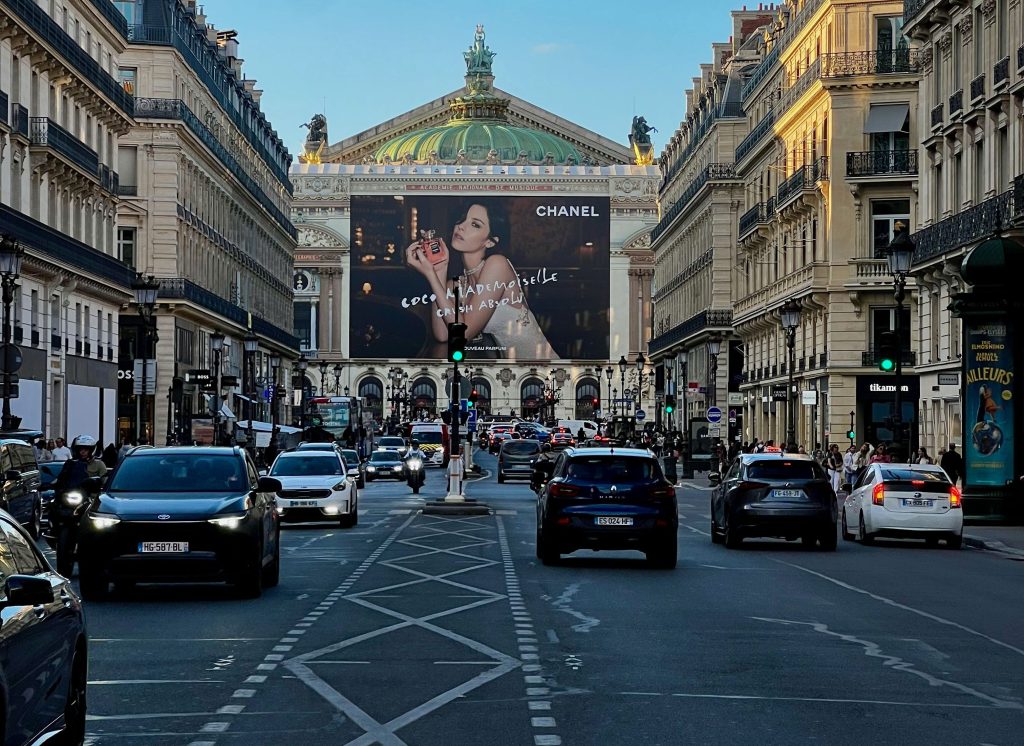
September 26–October 6, 2026: a day-by-day field guide to fashion, art, photography, and things worth leaving the runway for.
Paris Fashion Week does not arrive in an empty city.
That sounds obvious until the schedule gets dense enough to prove it. From September 28 through October 6, the Fédération de la Haute Couture et de la Mode runs the Paris Fashion Week Spring/Summer 2027 womenswear calendar.
The official program is packed with shows, presentations, exhibitions, openings and fashion-industry events.
Meanwhile, the Grand Palais has Cézanne. The Palais Galliera has nineteenth-century women in men’s clothes. The Musée des Arts Décoratifs opens a 40-year survey of its fashion collection. The Maison Européenne de la Photographie reopens with Irving Penn. The Musée de l’Orangerie begins a Monet exhibition built around time itself. The Palais Garnier has L’Histoire de Manon, a ballet about sex, money and ruin.
The trick is not choosing between fashion and culture.
The trick is walking far enough from the runway to see how much of Paris is already dealing with the same subjects.
Saturday, September 26: start before Fashion Week starts
The official fashion calendar does not begin until September 28, but the city has already put the machinery on the street.
At the Palais Galliera, A Wardrobe of One’s Own: Dissident Femininities in the 19th Century.
opens September 26. The exhibition looks at women who adopted the male dress codes of the nineteenth century, including figures such as George Sand and Rosa Bonheur, alongside less famous women documented in vernacular photographs. The subject is not merely trousers versus dresses. Galliera frames clothing as part of a larger struggle over women’s social position.
The museum is at 10 avenue Pierre 1er de Serbie, 16th arrondissement, and is open Tuesday through Sunday from 10 a.m. to 6 p.m., with Friday hours extending to 9 p.m. Admission.
: €14; reduced €12; visitors under 18 enter free.
There is an inconvenient wrinkle on the other side of town. Cézanne and Us.
is already running at the Grand Palais, but the exhibition is closed all day September 26 at the request of the Paris police prefecture. The show contains nearly 180 works tracing Cézanne’s influence from Gauguin and Matisse through Picasso, Mondrian, Joan Mitchell, Bridget Riley and Peter Doig. When it is open, it runs Tuesday through Sunday, 10 a.m.–7:30 p.m., with Friday hours to 10 p.m.; admission is €19.
.
So don’t build Saturday around Cézanne.
Build it around Galliera, then go elsewhere.
And at 7:30 p.m., the Palais Garnier offers the first performance of Kenneth MacMillan’s L’Histoire de Manon.
during this period. The ballet runs 2 hours 45 minutes with two intervals. The Paris Opera lists Nicholas Georgiadis’s costumes and sets alongside Massenet’s music and MacMillan’s choreography.
Tickets: The official Paris Opera ticket exchange.
is currently showing no tickets for the September 28–October 4 performances; returned tickets can appear there.
That is a better opening night than spending Saturday trying to elbow through a fashion-industry party to which nobody outside the industry was invited.
Sunday, September 27: music before the models
Sunday is the hinge.
Fashion people have not yet taken over the official calendar, which leaves room for something with no interest whatsoever in seasonal color reports.
The Philharmonie de Paris program supplies the obvious alternative: music at the Cité de la musique and Philharmonie, before the official fashion schedule starts the following day.
This is the day to keep deliberately loose. Take the metro. Walk. Find out what the city looks like before every second black car appears to have a fashion editor inside it.
Then save some energy.
The next morning starts the official week.
Monday, September 28: the machines start
The Fédération de la Haute Couture et de la Mode’s official schedule.
begins September 28 and runs through October 6. The opening day alone includes L’Oréal Paris Le Défilé. Express Your Worth, HKFG SS27, Dolce & Gabbana’s Stravaganza Siciliana, an exhibition called Perspectives Croisées, the Harper’s BAZAAR Polska launch cocktail and the Ann Demeulemeester Paris boutique opening.
Paris Fashion Week shows and presentations are invitation-only.
FHCM does not sell tickets for them.
The point is not to chase every listing.
Most people cannot get into most of them anyway.
Instead, use the official schedule as a map of where the fashion crowd is moving, then cross the river.
At 7:30 p.m., L’Histoire de Manon returns to the Palais Garnier. The performance is particularly useful for anyone interested in fashion as something other than clothes on a temporary platform: MacMillan’s ballet depends on costumes, sets, bodies and social status to tell a story about money and desire. Check the official Paris Opera ticket exchange for returned tickets.
The Garnier is at Place de l’Opéra, 75009.
There is also a useful last-minute option: the Paris Opera says the Palais Garnier sells a very limited number of €10 sixth-category tickets on the day of the performance, with very limited visibility and a maximum of two tickets per person. Discounted €25 tickets are also available at the box office from 30 minutes before the performance for qualifying visitors under 28 and certain other groups.
That is considerably more useful information than being told that the Garnier is “iconic.”
Tuesday, September 29: clothes with history behind them
Fashion Week gets deeper into its schedule, while another exhibition opens that has nothing to do with runway clothes.
At the Institut du Monde Arabe, 1 rue des Fossés Saint-Bernard, 5th, Long Live the Bride! Algeria, Morocco, Tunisia opens September 29.
The exhibition examines wedding clothing, jewelry and rituals from Algeria, Morocco and Tunisia, bringing together historic pieces with contemporary work. The exhibition includes costumes and adornments dating from the nineteenth and twentieth centuries and places them alongside contemporary artists from the Maghreb and its diasporas. Ticket availability includes timed admission.
That makes it unusually relevant during Fashion Week.
A runway collection tells you what a designer wants a garment to do now. A wedding garment can tell you what a community expects clothing to do across generations: mark status, family, age, marriage, place and ceremony.
The address is worth remembering because the 5th arrondissement provides a clean escape from the Fashion Week circuit.
Then, if the legs still work, head back toward the official schedule.
The useful rule for this day is simple: one fashion event, one cultural institution, no more than that. Paris gets smaller if every hour becomes a reservation.
Wednesday, September 30: the collision becomes unavoidable
This is the big one.
Three major exhibitions open on the same day.
At 107 rue de Rivoli, the Musée des Arts Décoratifs opens Look: 40 Years of Fashion at the Museum.
The exhibition marks forty years since the creation of the museum’s fashion department with 40 iconic outfits. More interestingly, it follows the life of a garment through the whole system: sketch, sewing workshop, embroidery, pattern, photography, runway, museum storage, conservation and restoration.
That last part matters.
Fashion Week tends to show the garment at the moment of maximum theatrical pressure. MAD shows the long afterlife: the storage room, the archive, the restoration table, the people who keep an old dress from falling apart.
The museum is open Tuesday through Sunday, 11 a.m.–6 p.m., with Thursday hours to 9 p.m. One ticket covers the exhibitions and collections on the same day. Advance online booking is strongly recommended on weekends.
On the other side of the Seine, the Maison Européenne de la Photographie, 5/7 rue de Fourcy, 4th, reopens after its inter-exhibition closure with PENN & FASHION.
Irving Penn photographed fashion for roughly six decades. The exhibition begins with his 1947–1950s work for Parisian haute couture, including Dior and Balenciaga, then moves through Ungaro and Courrèges, Yves Saint Laurent, Karl Lagerfeld and later work.
This is where the Fashion Week calendar and the art calendar stop pretending to be separate.
Penn did not simply document clothes. His fashion photographs became part of photography’s history.
The MEP is open Wednesday and Friday from 11 a.m. to 8 p.m., Thursday from 11 a.m. to 10 p.m., and weekends from 10 a.m. to 8 p.m. On-site admission is €13; online admission is €14.
Then go west.
At the Musée de l’Orangerie, Monet, painting time opens September 30. The exhibition marks the centenary of Monet’s death and examines his work through the problem of time: changing light, repeated motifs, seasons and the attempt to make duration visible on canvas.
The Orangerie is open 9 a.m.–6 p.m., except Tuesday, with the exhibition running through January 25, 2027. Standard admission is €12.50; reduced admission is €10.
There is also a strange little luxury available that morning: the museum schedules the next Claude Monet. In Real Time virtual-reality experience. The next visit is September 30 at 9 a.m.
Three museums. Three different versions of the same problem.
Clothes change, photographs freeze them, paintings try to stop time, and outside, Fashion Week keeps moving.
Thursday, October 1: photography after dark
The MEP becomes particularly useful on Thursday because it stays open until 10 p.m.
That changes the geometry of the day.
Fashion appointments can consume the afternoon. The MEP can wait until evening.
The Penn exhibition is also one of the few places during Fashion Week where looking at clothes does not require looking at a runway. Penn’s photographs move through Dior, Balenciaga, Courrèges, Saint Laurent and other houses while treating the models and garments as photographic subjects rather than advertisements alone.
That distinction becomes useful after several days of runway images.
If the Fashion Week schedule is a flood of new clothes, Penn is the evidence locker.
Then, at 7:30 p.m., L’Histoire de Manon is again at the Garnier. The performance lasts 2 hours 45 minutes with two intervals. Check the official Paris Opera ticket exchange for returned tickets.
A person can make a respectable day out of the MEP, a late meal in the Marais and the Garnier without attending a single industry party.
That is not a consolation prize.
Friday, October 2: the museums stay open
Friday is where the cultural calendar starts fighting back.
At the Musée de l’Orangerie, the new Monet exhibition gets its first scheduled Friday late night, with the museum open until 9 p.m. from 6 p.m. at the reduced €10 rate. The next visit is Friday, October 2 at 6 p.m. Last admission is 8:15 p.m.
That is the practical move: do something else first, then go to Monet when the ordinary museum day is finished.
The Musée des Arts Décoratifs also stays open until 9 p.m. on Thursdays, so Friday is not the only late option, but MAD’s new fashion exhibition remains useful throughout the day.
And on October 2, MAD adds another fashion-photography exhibition: Rafael Pavarotti. Photographer, running through May 2, 2027. The museum describes it as the first presentation in France of the Brazilian photographer’s work.
This is a good day to stop trying to see everything. Pick Penn or Pavarotti. Pick Monet or Cézanne. Paris does not award points for museum exhaustion.
Saturday, October 3: the Americans arrive
The CFDA/Vogue Fashion Fund’s Americans in Paris returns October 3–4 at 240 rue de Rivoli.
Ten current Fashion Fund finalists will present their collections to editors, buyers and fashion-industry figures: Aisling Camps, Amir Taghi, Terrence Zhou of Bad Binch Tongtong, Emily Dawn Long, Jamie Haller, Julia Ferentinos of Juju Vera, Zane Li of Lii, George Inaki of Milamore, Claire Sullivan of Miss Claire Sullivan and Zoe Gustavia Anna Whalen.
This is not a casual public street fair.
The CFDA describes the showcase in industry terms: editors, buyers and industry leaders. Anyone planning a visit should check access requirements rather than assuming that Fashion Week branding means an open door.
The better public-facing move is to treat the Rivoli address as a geographic marker and spend the rest of the day in the Marais.
The MEP is open Saturday from 10 a.m. to 8 p.m. and specifically recommends visiting before 2 p.m. or after 5 p.m. for quieter periods.
That makes Saturday a good day for Penn before the afternoon crush.
Then walk. Not because walking is wholesome. Because Paris reveals itself in the gaps between appointments.
Sunday, October 4: the cheap day
Sunday is the day to stop paying full price wherever the institutions allow it.
The Musée de l’Orangerie has its first Sunday of the month free-for-all on October 4, with online time-slot booking mandatory.
The Monet exhibition therefore becomes one of the most obvious appointments of the day, but the free ticket is not a magic wand. A free timed admission still requires planning.
The Palais Garnier also has a 2:30 p.m. performance of L’Histoire de Manon. Check the official Paris Opera ticket exchange for returned tickets.
The sensible Sunday is therefore not a twelve-stop museum crawl.
Book Monet. Walk through the Tuileries. Eat something. Then decide whether the Garnier makes sense. The city will still be there afterward.
Monday, October 5: the week starts thinning out
Monday is useful precisely because several museums close.
Galliera closes Mondays. MEP closes Mondays and Tuesdays. The Orangerie closes Tuesdays rather than Mondays.
That makes Monday a better day for neighborhoods, shops, architecture and whatever remains accessible on the Fashion Week schedule.
The official FHCM calendar still runs.
The industry does not suddenly disappear.
But the cultural program no longer needs to fight for attention with every other appointment in town.
This is the day to look at the official Fashion Week listings and choose one thing that is actually accessible rather than spending half a day trying to obtain entry to five things designed for buyers, editors, press and invited guests.
The difference between Paris Fashion Week and a fashion-themed vacation is access.
The former is an industry.
The latter is a spectator sport.
Tuesday, October 6: Fashion Week ends. Paris doesn’t.
October 6 is the final day of the official Spring/Summer 2027 womenswear ready-to-wear calendar.
That sounds like an ending. It isn’t.
The exhibitions that opened during the week continue for months. A Wardrobe of One’s Own runs at Galliera until February 14, 2027. Look: 40 Years of Fashion at the Museum runs until April 4. PENN & FASHION continues until January 17. Monet, painting time continues until January 25. Cézanne and Us runs until January 17.
That is the part of Fashion Week that tends to disappear from the photographs. The shows are temporary. The city is not.
For ten days, Paris supplies an enormous machine for looking at clothes. But the more interesting route runs around the machine: nineteenth-century women stealing men’s silhouettes, wedding garments carrying family histories, Penn turning dresses into photographs, Monet trying to paint time, Cézanne turning apples and mountains into a problem for generations of painters, and a nineteenth-century theater still filling its boxes with people watching a story about money and desire.
Fashion Week does not replace the Paris cultural calendar.
It puts pressure on it.
And for a visitor who knows how to move around the pressure, that is where the week gets good.
The practical calendar
September 26
- Palais Galliera — A Wardrobe of One’s Own, 10 avenue Pierre 1er de Serbie, 16th. Opens 10 a.m.–6 p.m.; Friday late until 9 p.m.; €14.
- Palais Garnier — L’Histoire de Manon, 7:30 p.m., Place de l’Opéra. 2h45 including two intervals. Check the official Paris Opera ticket exchange for returned tickets.
- Grand Palais — Cézanne and Us is closed September 26.
September 27
- Philharmonie/Cité de la musique — check the official performance calendar before committing the evening.
September 28
- Paris Fashion Week begins. Official FHCM schedule includes L’Oréal Paris, HKFG, Dolce & Gabbana, Perspectives Croisées and Ann Demeulemeester among the day’s events. (Note: Paris Fashion Week shows and presentations are invitation-only. FHCM does not sell tickets for them.)
- Palais Garnier — L’Histoire de Manon, 7:30 p.m. Check the official Paris Opera ticket exchange for returned tickets.
September 29
- Institut du Monde Arabe — Long Live the Bride!, 1 rue des Fossés Saint-Bernard, 5th. Opens September 29 and runs through February 28, 2027.
- Paris Fashion Week continues.
September 30
- MAD — Look: 40 Years of Fashion at the Museum, 107 rue de Rivoli.
- MEP — PENN & FASHION, 5/7 rue de Fourcy. Reopens September 30.
- Musée de l’Orangerie — Monet, painting time.
- Orangerie — Claude Monet. In Real Time VR, scheduled for 9 a.m.
- Palais Garnier — L’Histoire de Manon, 7:30 p.m.
October 1
- MEP — Penn, open until 10 p.m.
- Palais Garnier — L’Histoire de Manon, 7:30 p.m.
October 2
- MAD — Rafael Pavarotti. Photographer opens.
- Orangerie — Monet Friday late night, 6–9 p.m., €10.
October 3
- CFDA/Vogue Fashion Fund — Americans in Paris, 240 rue de Rivoli. Industry-focused; October 3–4.
- MEP — Penn, 10 a.m.–8 p.m.
October 4
- Orangerie — first Sunday of the month, free admission with mandatory online time slot.
- Palais Garnier — L’Histoire de Manon, 2:30 p.m.
- Americans in Paris continues.
October 5
- Fashion Week continues.
- Galliera and MEP are closed Monday.
October 6
- Final day of Paris Fashion Week Spring/Summer 2027 womenswear ready-to-wear.
- The exhibitions remain open beyond Fashion Week.

 Paris Diary
Leave a comment