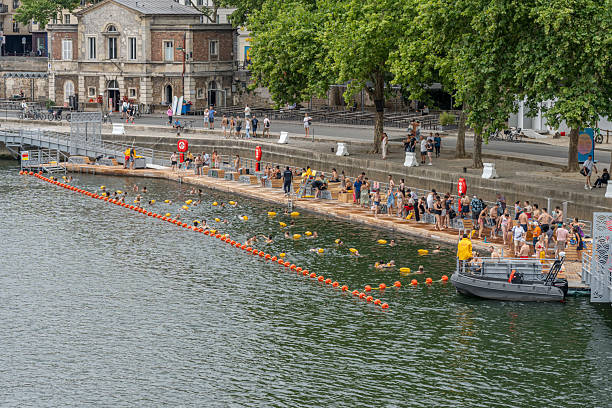
The Seine used to sit there like a dare.
Tourist boats pushed through it from morning until night while visitors leaned over stone parapets with phones raised, trying to capture the same view millions had captured before them. Couples drank supermarket rosé on the quays. Students stretched out on the embankments with paperbacks and Bluetooth speakers. Entire sections of the Paris economy depended on the river looking beautiful, yet almost nobody entered the water itself. For more than a century, the Seine functioned as a backdrop to city life rather than a participant in it. People admired it, painted it, complained about it, wrote poems about it, and photographed it endlessly, but they did not swim in it.
Then Paris did something many residents suspected would remain a press release forever.
It reopened the river.
For the first time since 1923, ordinary people could legally enter designated sections of the Seine reopening after 1923 ban and treat the river as something other than scenery. The decision generated predictable headlines about water quality, Olympic legacies, and urban renewal. More interesting questions emerged afterward. Would anyone actually want to swim there? Would the novelty wear off by the second summer? Would the reopening diminish Paris Plages, municipal pools, and the carefully constructed ecosystem of summer leisure that developed during the century when swimming remained prohibited?
The early evidence points in a different direction. The Seine does not appear to be replacing anything. Instead, it is changing how people move through the city during summer, altering the relationship between Paris Plages and the river, and creating new patterns of behavior that stretch from Bercy and Canal Saint-Martin to café terraces, pharmacies, convenience stores, and public spaces that suddenly find themselves serving a different type of visitor.
The city spent two decades building activities around the river because nobody could enter it. Now that people can, the entire arrangement starts to look different.
Swimming in the Seine in 2026: How Paris Reopened Its River
The significance of Seine swimming has less to do with swimming itself than with what the river represents. For generations, Paris treated the Seine as a visual asset. Visitors crossed it, photographed it, sailed on it, and built entire afternoons around sitting beside it, but the water remained physically off limits. Paris Plages emerged from that reality. The city created temporary beaches, deck-chair zones, games, workshops, and recreational spaces because people wanted access to the river even when access to the water remained impossible.
The river became the stage set while everything else happened around it.
That arrangement worked surprisingly well. On a hot July afternoon, many visitors do not actually want to swim. They want shade, a place to sit, something cold to drink, and enough space to watch the city pass by without feeling trapped indoors. Paris Plages supplied those things and continues to supply them today.
Swimming changes the equation because it transforms the Seine from scenery into activity. A visitor entering the river participates in the city differently than someone merely observing it. The water stops functioning exclusively as atmosphere and starts functioning as infrastructure. That distinction may sound abstract, yet it becomes obvious at the swimming sites themselves. The three public swimming sites each offer a different version of the experience three official swimming sites (Bras Marie, Grenelle, Bercy). People arrive with towels instead of cameras. They discuss water quality instead of architecture. They compare queue lengths, changing facilities, and swimming conditions rather than debating which bridge offers the best photograph.
The river has become something to do rather than something to look at.
That shift carries consequences well beyond the water.
Paris Plages 2026: How Seine Swimming Is Changing Paris’s Summer Recreation Network
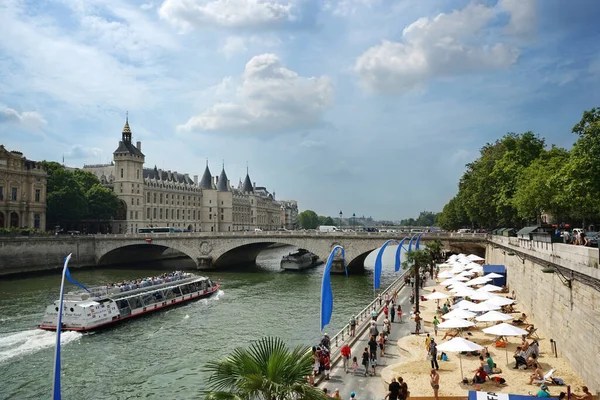
The simplest version of this story would frame Seine swimming and Paris Plages as competitors. One attraction arrives. Another attraction loses relevance. Journalists like these narratives because they are easy to explain and fit neatly into headlines.
Reality looks messier.
Paris Plages was never fundamentally about swimming Paris Plages continuing as a broader recreation network. It succeeded because it offered relief. Parents needed activities for children during school holidays. Office workers needed places to spend an hour after work. Students needed somewhere to gather without spending twenty euros every time they sat down. Visitors needed alternatives to museums when temperatures climbed high enough to make indoor queues feel like punishment.
Those needs remain intact.
The reopening of the Seine adds an activity rather than eliminating one. A visitor can swim at Bercy, spend time at Bassin de la Villette, wander through Canal Saint-Martin programming, stop for lunch, and still end up stretched across a deck chair later in the afternoon. The city has expanded the menu rather than replacing a dish.
What changes is duration.
People who swim rarely behave like people who merely stroll past the river. They arrive earlier because capacity is limited. They carry more equipment. They remain nearby afterward because nobody rushes home immediately after hauling a wet towel back into a tote bag. A quick visit becomes an afternoon. An afternoon often becomes most of the day.
That longer presence benefits the broader Paris Plages ecosystem because the activities surrounding the river suddenly acquire a larger audience. Swimming may draw people to the water, but the rest of the city still determines whether they stay.
Bercy Swimming Area: The Seine Site Most Likely To Change Summer in Paris
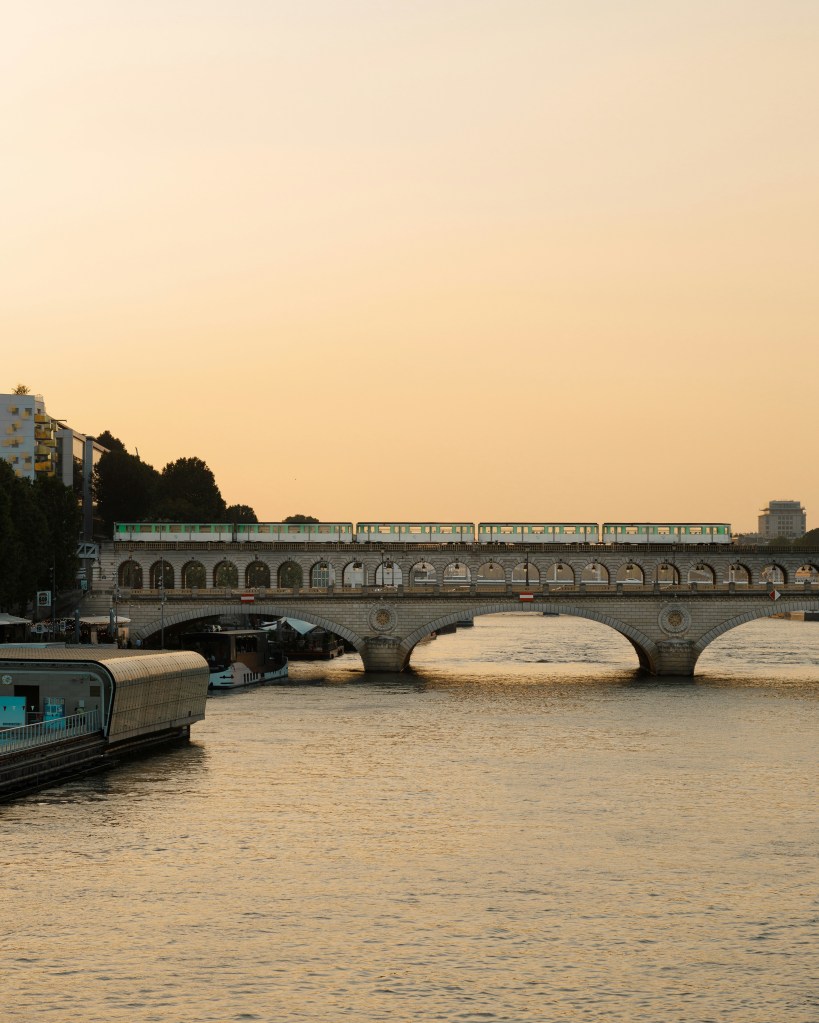
already had restaurants, parks, cafés and shops. The Seine simply gives more
people a reason to linger.
Most visitors will gravitate toward Grenelle because the Eiffel Tower continues to exert an almost supernatural influence over tourist decision-making. If a swimming site offers a chance to place the Eiffel Tower in the background of a photograph, a certain percentage of humanity will choose it regardless of every other practical consideration.
Bercy presents a different proposition.
The largest Seine swimming site sits beside a district Bercy capacity and facilities that already knows how to absorb large numbers of people. Bercy Village, Parc de Bercy, nearby restaurants, cinemas, supermarkets, cafés, pharmacies, and public spaces existed long before the first swimmer entered the river. The neighborhood did not require reinvention. It merely acquired a new source of traffic.
That distinction matters because much of the discussion surrounding Seine swimming has drifted toward exaggerated predictions about new businesses and economic transformation. The available evidence does not suggest Paris is experiencing a gold rush of swimwear boutiques, floating cocktail bars, or entrepreneurs reinventing themselves as river merchants.
The more plausible story is also the more interesting one.
Public swimming changes how people use an area more than 1,000 swimmers per day. A swimmer emerging from the Seine needs water, food, sunscreen, a pharmacy, coffee, shade, or somewhere to sit while waiting for friends. Families extend visits. Groups combine swimming with lunch. Tourists who originally planned to spend an hour near the river discover they have accidentally built an entire afternoon around it.
Cities often change through habits rather than headlines. The most significant economic impact of Seine swimming may come from thousands of small decisions repeated throughout the summer rather than from any single dramatic development. Existing businesses benefit when people remain in a neighborhood longer, and swimming gives them a reason to do exactly that.
Seine Swimming vs Piscine Joséphine Baker and Paris Hotel Pools
Comparisons between the Seine, municipal pools, and luxury hotel pools tend to overstate the degree to which these facilities compete with one another. The audiences overlap less than many observers assume.
Piscine Joséphine Baker offers predictability Piscine Joséphine Baker. Swimmers know the conditions in advance. The water remains controlled. Lanes exist. Training remains possible. The experience revolves around swimming itself rather than the symbolism attached to the location.
The Seine offers something entirely different. People enter the river partly because it is the Seine. The attraction extends beyond exercise and into history, novelty, civic pride, curiosity, and perhaps a small desire to participate in something that would have been impossible a few years ago.
Luxury hotel pools occupy yet another category. Guests paying for access to those facilities generally seek privacy, comfort, spa services, and insulation from uncertainty. Public swimming in the Seine delivers almost the opposite experience. It involves queues, weather conditions, municipal regulations, daily water testing, and the presence of hundreds of strangers pursuing exactly the same idea.
These options serve different purposes. Rather than replacing one another, they collectively contribute to a broader culture of aquatic recreation that feels increasingly central to summer life in Paris.
How Seine Swimming Could Affect Canal Saint-Martin and Bassin de la Villette
Major attractions often strengthen nearby destinations rather than overshadowing them. Visitors arrive for the headline attraction, discover surrounding areas, and distribute themselves throughout a broader network of spaces. Museums support neighboring cafés. Transit hubs generate entire commercial districts. Public swimming appears poised to operate according to the same logic.
Canal Saint-Martin and Bassin de la Villette already function as established summer recreation zones, yet they offer a noticeably different atmosphere than the Seine’s bathing sites. The canal districts feel younger, looser, and less ceremonial. Students occupy the banks with bags of groceries from Monoprix. Cyclists weave through crowds carrying portable speakers. Families stake out shaded sections of grass while children negotiate increasingly elaborate games whose rules seem to evolve by the minute.
Not everyone wants to swim in a river.
Some visitors dislike crowds. Others dislike uncertainty. Some arrive only to discover that conditions have forced restrictions or that the queue stretches farther than expected. Those people still need somewhere to spend the afternoon, and the broader network of summer recreation areas stands ready to absorb them.
The Seine attracts attention. Canal Saint-Martin and Villette may quietly collect the overflow.
How Swimming in the Seine May Change Paris Riverbanks, Cafés and Local Businesses
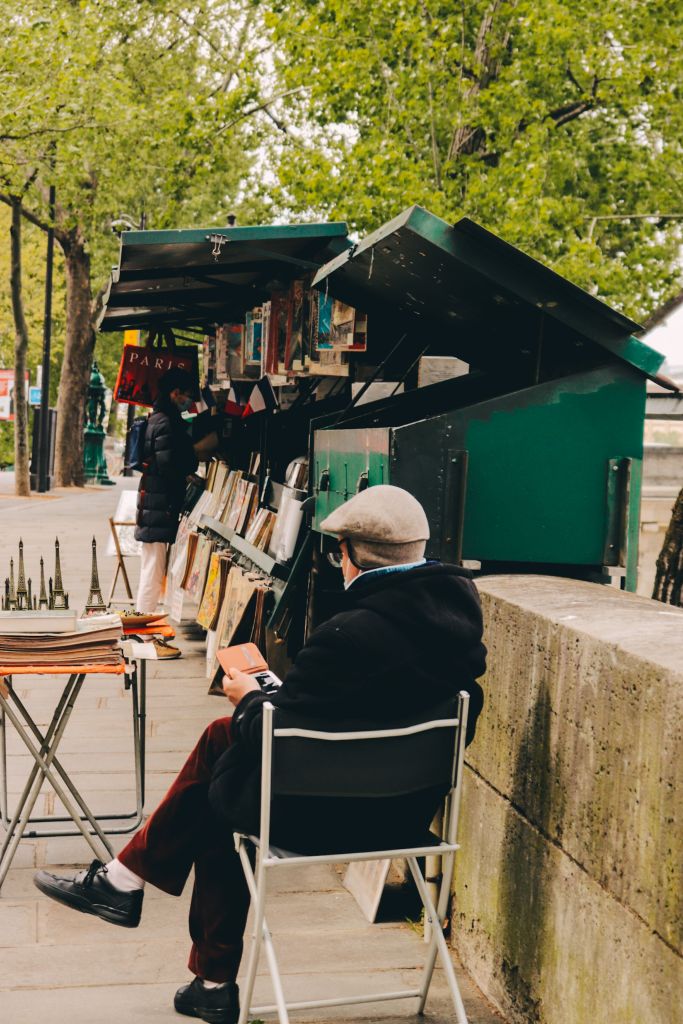
themselves working beside a river that feels more active than it did a decade ago.
The reopening of the Seine is unlikely to transform the bouquinistes into major beneficiaries of a new swimming economy. The image sounds appealing but collapses under inspection. Someone shopping for a used Simenon paperback and a nineteenth-century map of Paris occupies a different mental space than someone looking for sunscreen and a towel.
Yet the riverbanks still change.
The difference emerges through tempo rather than merchandise. Swimmers arrive with friends. Parents wait for children. Curious visitors gather to watch. Tourists appear simply to confirm that people are genuinely swimming in the river. As a result, the banks remain busier throughout the day and feel more active than they did when the Seine functioned primarily as a visual attraction.
Whether every business benefits remains difficult to predict. More foot traffic does not automatically generate more sales, and some vendors may find increased crowds annoying rather than profitable. What seems much more certain is that the mood of the river changes. The Seine no longer serves exclusively as a thing people observe from a distance. Increasingly, it functions as a place where people participate directly.
That shift alters the atmosphere around everything else.
What to Expect From Swimming in Paris During Summer 2026
The most likely outcome for summer 2026 is adaptation rather than revolution. Grenelle will continue attracting visitors drawn by Eiffel Tower views. Bras Marie will appeal to those who want the historic center wrapped around the experience. Bercy will probably become increasingly important because facilities, capacity, and convenience Bercy capacity and facilities tend to matter more than scenery once novelty begins to fade.
Paris Plages will remain crowded.
Canal Saint-Martin and Bassin de la Villette will likely benefit from increased interest in waterside recreation. Pharmacies near swimming sites may sell more sunscreen. Convenience stores may sell more drinks. Ice cream vendors may notice heavier traffic. Parents will continue searching for shade. Teenagers will continue occupying riverbanks as if they personally invented summer. The city will continue discovering that any successful public space eventually becomes a stage for behavior nobody anticipated.
There will also be closures water-quality monitoring and weather closures. Heavy rain still affects water quality water-quality monitoring and weather closures. Critics will continue questioning whether the cleanup effort delivered everything promised. Supporters will continue pointing to the simple fact that people are once again swimming in a river that remained off limits for more than a century.
Both sides will find evidence for their position.
That tension may prove permanent.
Is Swimming in the Seine Changing Summer in Paris?
For generations, the Seine functioned primarily as an object of observation. People crossed it, photographed it, painted it, and built entire afternoons around sitting beside it. The river shaped the experience of Paris without directly participating in it.
Now it does.
That change matters because it extends beyond swimming. It influences how long people remain in a neighborhood, how they use public space, where they spend money, and how they think about the relationship between the city and the water running through its center. It strengthens some parts of Paris Plages, increases the importance of others, and encourages visitors to view the river as a place for participation rather than passive admiration.
The Seine spent a century daring people to get in. Paris finally called its bluff.


Leave a Reply