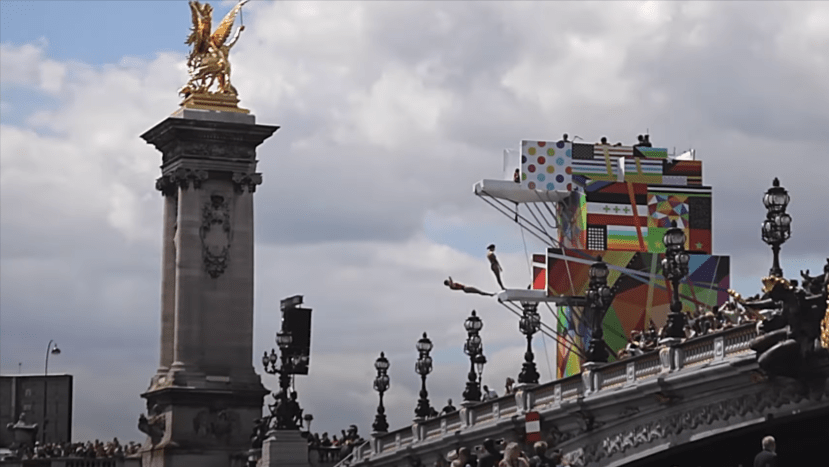
The Seine River snakes through the heart of France’s capital, an unmistakable trademark of the cityscape. Renowned for its picturesque beauty, the Seine immediately evokes romance and amour for those who gaze upon it and its overlying bridges adorned with masterfully wrought sculptures. Its tranquil waters, which transition from vibrant turquoise to silken black under the veil of night, serve as both a scenic backdrop and a transport artery for the city. From the iconic Pont Neuf, which heralded a new era of admiration for the river’s splendor over 400 years ago, to the countless leisurely strolls and intimate moments that have since taken place along its banks, the Seine holds a storied past in the minds and hearts of Parisians. Revered in art, literature, and cinema, the river has inspired many great works, serving as a muse for painters like Claude Monet and Edouard Manet, as well as a backdrop for famous film scenes. Today, the Seine remains a timeless symbol of Paris’ enviable beauty.
Now, the Seine’s future is being noisily debated as the opening ceremony of the Paris 2024 Olympics draws nearer. In a groundbreaking initiative announced in July 2022, the city of Paris unveiled plans to reintroduce swimming in the river for the first time in nearly a century. This ambitious project, spearheaded by city officials and costing 1.4B euros ($1.6B), surprised many, as the Seine has long been deemed unfit for swimming due to pollution. The initiative has gained momentum from Paris 2024 Games organizers, who envision using the Seine as a centerpiece for Olympic events, including open-water swimming competitions. As part of the effort to improve water quality, construction commenced on key infrastructure elements, such as disinfection units at wastewater treatment plants managed by the Paris region public sanitation service. Additionally, a rainwater storage basin was implemented to mitigate pollution during periods of heavy rainfall, underscoring the city’s commitment to ensuring the safety and cleanliness of the river. With ambitious planning and strategic implementation, Paris aims to realize its long-held dream of restoring the Seine to a venue for aquatic leisure, culminating in the reintroduction of swimming activities during the 2024 Olympic Games.
A Plunge Through Time: Swimming in the Seine
The Seine River, a 777-kilometre-long (483 mi) ribbon of water winding from Dijon, through the heart of Paris, and discharging in the English Channel, has a surprising history as a swimming spot.
Early Days: A River Playground (Pre-1900)
Paris’ love affair with the Seine as a swimming pool stretches back centuries. Parisians, especially during heat waves, flocked to the river for leisure. The Celtic tribe, the Parisii, who settled along the Seine in the 7th century BC, were known to be avid fishers, likely enjoying the cool water too.
Olympic Splash: The Seine Takes Center Stage (1900)
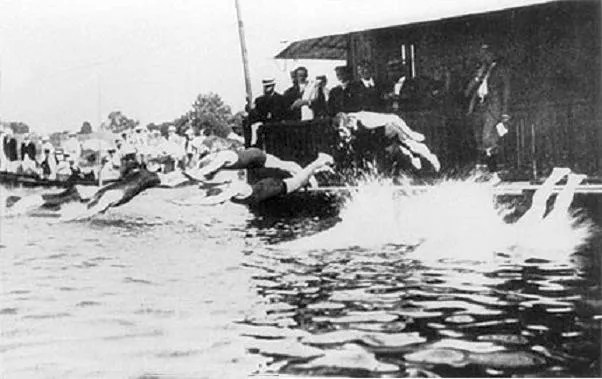
The Seine truly shone on the world stage in 1900 when Paris hosted the Summer Olympics. The city proudly held seven men’s swimming competitions right in the river, between Courbevoie and the Asnières bridge. Imagine Olympic swimmers battling the currents for gold medals.
Traversée de Paris à la Nage: A Daring Swim (1905)
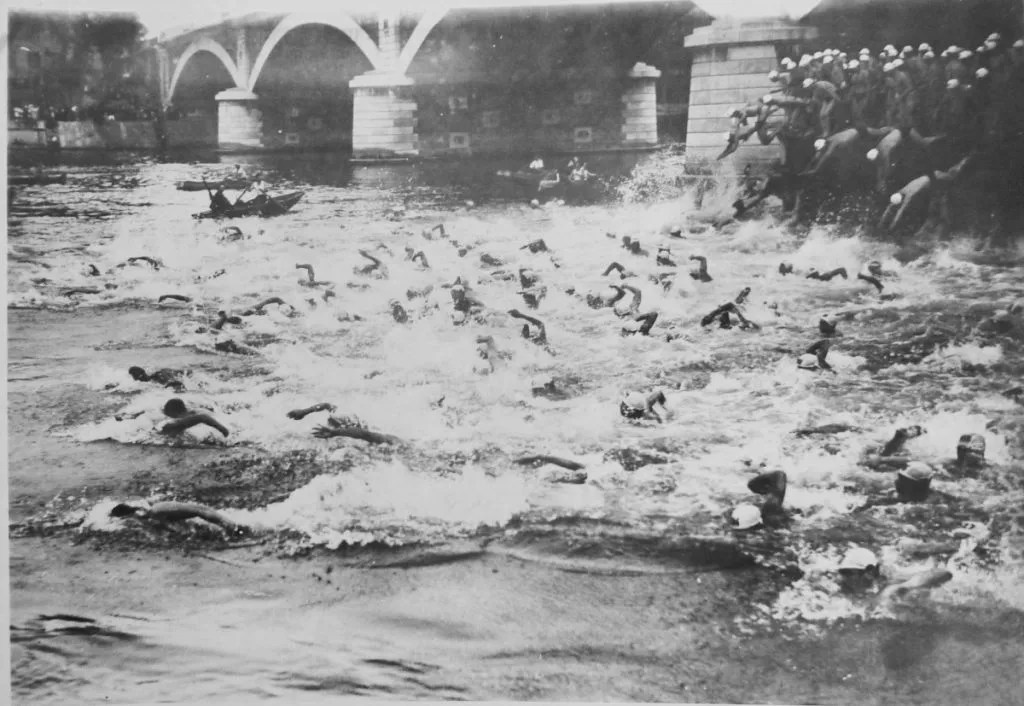
Capitalizing on the Parisian enthusiasm, a sports enthusiast named Georges Clemenceau launched the “Traversée de Paris à la Nage” (Crossing of Paris by Swimming) in 1905. This popular event saw hundreds of amateur swimmers take on the challenge of conquering the Seine’s central stretch.
The Tide Turns: Farewell to Swimming (1923)
Sadly, by the 1920s, the Seine’s magic began to fade. Increasing pollution, strong currents, and growing boat traffic made the river a dangerous swimming spot. In 1923, the city officially banned swimming in the Seine, a decision that stood for nearly a century.
A Parisian Dream Revived: The Seine Beckons Again
Planners for the 2024 Paris Olympics envision an opening ceremony set at sunset, with athletes sailing on numerous riverboats along a three-mile stretch of the Seine. Their destination: a amphitheater erected for the occasion at the Trocadero across from the Eiffel Tower on the opposite bank. Here, a certified Olympic-grade extravaganza unfolds, complete with acrobats, mesmerizing light shows, drone displays, and dancers performing atop nearby rooftops.
Initially, approximately 600,000 individuals were expected to have access to free tickets for the groundbreaking opening ceremony on July 26. However, that number has now been halved to around 300,000. Earlier in March, citing security concerns, the nation’s Minister of the Interior Gérald Darmanin announced that 104,000 paid tickets will be available for seats on the lower riverbank, while 222,000 upper banks seats will remain free, but distributed via a quota system.
As for actual swimming in the Seine by the Olympics kick-off? Some are saying, not so fast. For them, it’s difficult to imagine a two-year project—even a 1.4B euro one—making the polluted urban river swimmable after 100 years. Judging by the scenes at the river’s banks, it’s not hard to see how why it’s been empty of swimmers for so long. Oily pools floating with bottles and cans accumulate near the stone embankments. Restaurant barges indiscriminately discharge wastewater into the river. As for aquatic life, well, despite fishing lines cast into the water, spotting fish amidst the murky green muck proves nearly impossible. However, it’s the torrential rainstorms that are the most notorious enemy of the Seine’s cleanliness. These downpours swiftly overwhelm the city’s aging sewer system, causing street runoff and sewage to overflow into the river, presenting a noxious concoction detrimental to its ecosystem.
But planners have high hoped for what they propose as a solution: the construction of a vast, cavernous basin dug just a couple of blocks from the Seine on the Left Bank, between the Austerlitz train station and a hospital built in the 1600s.
At the basin’s site, scaffolding around a concrete circle is visible. Beneath lies an immense chamber, towering nine stories high, adorned with pillars that overshadow a bulldozer still actively excavating at its base. When finished, it will be the size of 20 Olympic swimming pools, and will link to a tunnel several blocks long, extending from the 13th Arrondissement beneath the Seine to the Right Bank. Upon completion, stormwater will cascade into both the tunnel and the basin. The water will then gradually drain back into the sewer system without overwhelming it.
To clear the water by late July, additional measures are under way as well: the development of three additional basins in the outlying suburbs downstream; an initiative to connect residents near the Seine who are not yet linked to the city’s sewers; the refurbishment of two sewage treatment plants; and an order for restaurant barges to establish connections to the sewer system, a measure with a mere 50% compliance at present.
Despite these efforts, it’s hard to say whether plans will meet total success by late July. Last August, officials had to annul the swimming segment of a Paralympic triathlon test event and a two-day swimming event due to bacteria levels surpassing safe thresholds. The culprit—a malfunctioning valve in the system—sent an excessive influx of sewage into the river. While some events were permitted to proceed on certain days, a particularly intense period of rainfall late last summer contributed to the discharge of contaminated runoff into the Seine.
Despite these events, Paris 2024 chief executive Étienne Thobois appears optimistic about the ongoing water-clearing project to hit its target by the start of the 2024 Games. “In light of these factors and our assessment that we were able to facilitate swimming on two days and came close on the other days, we are confident that the extensive efforts invested in cleaning the river over the past four to five years will yield positive results,” Thobois recently told the Washington Post.
Nevermind Athletes—Will You Swim the Seine this Summer?

Project success or no, Olympics fans in attendance won’t be officially allowed to swim in the Seine during the event. Officials say that they aim to open the Seine to the public for swimming by 2025 as an “inheritance” from the historic Olympics event of the previous year. Which raises the question: Will fans and ordinary Parisians be able to access the Seine River and its banks and quays during the games?
Available reports indicate that, yes, the banks and quays of the Seine River will remain open to the public during the Olympics. Familiar sights on the quays will include the famous booksellers, thanks to the merchants’ victory in a disagreement with Paris City Hall, which requested their removal. In a compromise, the booksellers agreed to close and cover their stands for the opening ceremony.
One familiar sight that will be missing this summer are the Paris plages, or Paris beaches, the popular makeshift beaches that grace the banks of the Seine River, Bassin de la Villette, and other scenic spots throughout the city. These temporary oases transform the riverside into vibrant city resorts, complete with beach chairs, umbrellas, lush gardens, cabanas, and even expansive swimming pools in the case of Bassin de la Villette. This year, due to the Olympics, they will be absent.
As for sailing along the Seine, there is still some uncertainty about the effect the Olympics might have. For example, companies operating river cruises popular with tourists are approaching the Olympics in varying ways. Some say they will operate as normal during the games, while others will halt all cruises, and still others haven’t determined what they’ll do come late July, but have ceased marketing cruises for the period of July 26 to August 11. Regions to be blocked off to cruises along the Seine include the Olympic Village for housing athletes.
Race to the 2024 Olympics
The story of swimming in the Seine is a fascinating journey—from a natural playground to an Olympic arena, and finally, a potential urban oasis; from daring amateur racers of the “Traversée” to the determined Parisians working towards a cleaner river. Paris has never forgotten the magic of swimming in the Seine. With the 2024 Summer Olympics returning to the city, a new wave of optimism has arrived. The story of swimming in the Seine is about to open a new chapter kicked off by what will be a historic moment at the opening ceremony on July 26.


Leave a Reply