Tag: eiffel-tower

  • Fête de la Musique 2026 in Paris, or Six Cities Built From Sound

    Fête de la Musique 2026 in Paris, or Six Cities Built From Sound

    The question shows up every June like it’s going to mean something. What is Fête de la Musique like in Paris?

    It never lands cleanly. It can’t. The festival is too wide, too fractured, too many cities stacked on top of each other for a single description to hold. One block is a conservatory recital inside a stone courtyard that behaves like a soundproof box. Three streets over, a cargo bike is dragging a bass-heavy DJ set through a crowd that looks half awake and half feral. Both count. Both are official. Both are Paris.

    So the better question is not what it is like. It’s which version of Paris are you entering.

    Because on June 21, Paris stops being one city and becomes several overlapping systems of sound, each with its own rules of movement, etiquette, and noise tolerance. Some versions require stillness. Some require drift. Some require endurance more than taste.

    The point of this guide is not to compress that into a summary. That would be dishonest. The point is to map the versions clearly enough that a decision becomes possible. Where to stand. What to avoid. When to leave. And what kind of night is actually being chosen, even if nobody admits they are choosing it.

    Six versions follow. Each one is real. Each one runs at the same time.

    1. The Institutional Listener — Paris as Controlled Resonance

    This is the version of Paris that refuses mess. Sound is allowed in, but never allowed to sprawl. Everything is pre-shaped before it reaches the ear. Nothing is left to chance, and nothing is left uncontained.

    At Radio France – Studio 104 (116 Avenue du Président Kennedy, 75016), programming typically runs on June 21 from early evening into late night (roughly 6:00 PM–11:00 PM), depending on broadcast scheduling. Entry is free but reservation-based, and tickets usually disappear quickly once released. Security is standard institutional fare—bag checks, limited standing movement, no late entry once sets begin. Inside, jazz ensembles and curated groups perform under suspended microphones that capture every breath before it becomes atmosphere. The room behaves like a recording first, a concert second.

    Pro tip: arrive early even with a reservation. Late entry often means missing the first full set, and Studio 104’s sound balance changes noticeably once the room is fully occupied.

    At Église de la Madeleine (Place de la Madeleine, 75008), choral and brass programming typically unfolds from late afternoon into evening (around 5:00 PM–9:30 PM) as part of Fête de la Musique church programming. Entry is free, but seating is first-come and limited. The stone interior does not amplify sound so much as reorganize it. Notes rise into the dome and return slower, heavier, softened by mass and height.

    Pro tip: stand slightly off-center rather than directly under the dome. The vertical resonance is stronger there, and brass sections can become overwhelming if you’re directly beneath the main vault.

    At Musée Eugène-Delacroix (6 Rue de Furstemberg, 75006), courtyard performances generally take place in the early evening window (around 6:00 PM–9:00 PM). Entry is usually free during special cultural nights, though museum access rules can vary depending on programming year. The courtyard is tight and enclosed, with ivy, stone, and geometry doing more acoustic work than any speaker system. Small ensembles—often conservatory strings or chamber formations—perform unamplified, producing sound that hits surfaces before it reaches the crowd.

    Pro tip: avoid standing against the walls. Reflected sound here is delayed and can muddy harmonic clarity. The center of the courtyard has the cleanest acoustic reading.

    At Institut du Monde Arabe (1 Rue des Fossés-Saint-Bernard, 75005), programming typically runs from late afternoon into night (about 5:00 PM–10:30 PM). Entry is often free for courtyard or terrace events, but some indoor performances may require timed tickets depending on the year’s schedule. The glass façade acts like a filter rather than a window. Sound, light, and movement are softened into layered geometry rather than released outward.

    Pro tip: stay near the reflective edge of the courtyard rather than the center. The acoustic layering changes noticeably as sound bounces between glass and stone, and the edge gives a clearer separation between instruments.

    This is Paris for listeners who want certainty more than surprise. Movement stays minimal. Conversations drop to half-volume. Even applause feels negotiated, like the room has set terms and expects compliance.

    2. The Literary Drifter — Paris as conversational drift

    Cross the Seine and the structure loosens without collapsing. Sound stops behaving like programming and starts behaving like overlap. Nothing locks into a single stage for long, and nothing stays fully contained once it begins.

    At Place Saint-Michel (75005), activity typically unfolds from mid-afternoon into late evening (roughly 4:00 PM–11:30 PM) on June 21. There is no fixed stage layout. Sound arrives in competing fragments, each holding for a few minutes before dissolving into the next. A student choir from a conservatory often gathers near the fountain edge, running through unfinished harmonies that never fully lock into a single key. Nearby, a jazz duo—upright bass with visible wear on the fingerboard and a tenor sax pushed slightly past clean tone—sets up without ceremony. The sound competes directly with pedestrian crossing signals that click every thirty seconds, turning the intersection into an accidental metronome.

    Pro tip: stand slightly off-axis from the fountain. Direct alignment pulls you into overlapping sound sources that blur detail. The edges of the square offer clearer separation between sets, especially when crowd density spikes after sunset.

    The crowd here shifts continuously throughout the evening. Law students move in clusters with tote bags half-open, programs folded and refolded until the ink softens. Visiting academics pause mid-route as if mapping sound rather than geography. Writers occupy fixed positions for too long, half-reading paperbacks they will not finish because attention keeps breaking toward the next sonic interruption. Conversation behaves like background noise rather than structure, forming briefly in gaps between sets and collapsing the moment a new instrument takes over the air.

    A short walk away, the atmosphere tightens at Palais-Royal (75001), where arcades and courtyards compress sound into deliberate geometry. Programming here typically runs from late afternoon into evening (around 5:00 PM–10:00 PM). Jazz ensembles and conservatory groups perform under colonnades that shape projection naturally, removing excess reverberation without digital control. Sets tend toward modal structures and restrained improvisation, with musicians leaving deliberate gaps between phrases rather than filling the acoustic space.

    Pro tip: move deeper into the arcade rather than staying in the central courtyard. The colonnades create a natural acoustic filter, and mid-depth positions reveal detail that disappears in the open center.

    This is not chaos and not order in any strict sense. It is interpretation shaped by architecture, foot traffic, and attention span. Music behaves less like performance and more like language that refuses to close its sentence.

    3. The Aesthetic Wanderer — Paris as cinematic spill

    This is the version of Paris where sound stops respecting ownership. Nothing belongs to a stage. Nothing stays inside a venue. The city turns porous, and the Canal Saint-Martin becomes a long, slow spillway for whatever is loud enough to survive open air.

    Along the canal, activity concentrates most reliably between late afternoon and midnight (roughly 4:00 PM–12:00 AM) on June 21. There is no ticketing system here. No entry point. The crowd forms as a consequence of weather, daylight, and whoever decided to bring a speaker that day. Portable rigs mounted on cargo bikes drift through pedestrian clusters. The music they carry is not curated in any formal sense: deep house edits, Afro-electronic cuts, slowed techno fragments. Everything bleeds into canal reflections and cigarette smoke that never quite clears in the humid air.

    Pro tip: stay mobile. The sound field changes block by block, especially between Jaurès, République spillover, and the Saint-Martin bridge crossings. Standing still too long locks you into a mix that may already be fading two minutes later.

    At La REcyclerie (83 Boulevard Ornano, 75018), programming typically runs from early afternoon into late evening (around 2:00 PM–10:30 PM) on Fête de la Musique. Entry is generally free for outdoor areas, with paid drinks and food service inside the rail-side venue. Built into a former railway station at Porte de Clignancourt, the space behaves less like a club and more like a daylight machine for sound. Afro-electronic, house, and experimental sets unfold without clean genre borders, often shifting mid-set without announcement.

    Pro tip: arrive before sunset. Once the light drops behind the rail structure, the acoustics flatten and the crowd density doubles. The space becomes more congested, less readable.

    Crowd at sunset on Seine for world music day paris
    Revelers packing the banks of the Seine at golden hour for Paris’s annual Fête de la Musique.

    At Le Hasard Ludique (128 Avenue de Saint-Ouen, 75018), programming usually stretches from late afternoon into night (roughly 5:00 PM–11:30 PM). Entry is typically free or low-cost depending on indoor access rules for the event, with outdoor rail-side activation forming the main listening zone. The long railway architecture channels sound horizontally rather than upward, so sets feel like they move laterally through the body of the space. Electronic, live hybrid, and experimental formats often shift without formal transitions, as if the structure itself refuses segmentation.

    Pro tip: stand under the rail arches rather than in open courtyard zones. The arches carry bass differently, producing a tighter, more physical low-end response.

    At Parc des Buttes-Chaumont (1 Rue Botzaris, 75019), particularly around Pavillon Puebla, programming tends to surface from late afternoon into late evening (around 4:00 PM–10:30 PM). Entry is free. The event structure is unstable by design. Label-driven sets and pop-up electronic programming appear in fragmented form rather than as scheduled shows. Cookie Records-style activations often behave less like concerts and more like weather systems that briefly settle over the park before moving on.

    Pro tip: elevation matters here. The upper paths near the pavilion catch sound differently than the lower lake perimeter. Moving between levels changes the mix more than moving between artists.

    This is Paris for people who do not attend events in a conventional sense. They drift through them. The city does the editing. The listener just follows what remains audible.

    4. The Night System Participant — Paris as curated intensity

    Along the Canal Saint-Martin, sound stops belonging to any single stage, or any single authority. It drifts with bodies, bikes, and late-day light that flattens reflections into liquid silver.

    At Canal Saint-Martin, Fête de la Musique rarely behaves like a programmed event. Portable speakers strapped to cargo bikes cut through pedestrian clusters like moving punctuation. Deep house edits and Afro-electronic tracks spill out in uneven bursts, colliding with cigarette smoke and water reflections before dissolving into the canal’s slow current.

    There is no official schedule here, but the strongest activity usually gathers from late afternoon into the late evening, roughly 5:00 PM to 11:30 PM. No tickets. No entry points. The only requirement is movement—standing still means losing the next sound source entirely.

    The canal does not amplify music. It delays it, stretches it, returns it slightly wrong.

    A short ride north, the tone shifts inside La REcyclerie (83 Boulevard Ornano, 75018), a former railway station at Porte de Clignancourt turned café-culture-venue hybrid. On June 21, programming typically starts in the mid-afternoon, around 2:00 PM to 4:00 PM, and runs into the late evening. Entry is generally free, though some workshops or special sets may require RSVP depending on this year’s lineup.

    Here, DJ sets lean toward Afro-electronic, house, and experimental blends that never fully settle into genre identity. The courtyard fills early when the weather holds. Once capacity peaks, the experience becomes more sonic than visual. Pro tip: arrive before the main wave, or accept that you’ll be listening from the edges near the old rail fencing.

    Further along the same railway spine sits Hasard Ludique (128 Avenue de Saint-Ouen, 75018), where sound travels horizontally under the old tracks instead of projecting outward. Programming on Fête de la Musique typically begins in the late afternoon and continues past midnight, moving between live bands, hybrid electronic sets, and DJ collectives without formal breaks.

    There is no separation between stage and crowd here. People lean against metal beams that once carried freight. Drinks spill into ballast gravel. The sound moves along the structure like it still remembers it was built for transit.

    South-east, the tone opens into foliage at Parc des Buttes-Chaumont, especially around Pavillon Puebla. Label takeovers and DJ collectives typically begin around 5:00 PM and continue until park restrictions tighten later in the night.

    Here, sound behaves like weather rather than performance. A dense house set can flatten into ambient texture as it passes through trees. People move between grass slopes, stone bridges, and temporary bar setups, tracking clusters of sound rather than any fixed stage.

    Practical note: schedules matter less than movement. The best sets are rarely found on arrival—they’re found by following density.

    This is not Paris as a seated audience. It is Paris as drift logic. No fixed entry, no fixed exit, only fragments connected by motion.

    5. The Mass Spectacle Body — Paris as density and pressure

    Some versions of Fête de la Musique don’t ask for taste, necessarily. They ask for endurance. Curation dissolves, and density takes over. The city stops presenting music as something to attend and starts producing it as something to withstand.

    At Place de la République (75003), activity typically builds from late afternoon into late night (roughly 5:00 PM–12:30 AM) on June 21. There is no single stage in practice, even when official programming exists. Temporary sound systems appear along the square’s perimeter—stacked speaker towers, mobile DJ rigs mounted on vans, and small collective setups powered by portable generators. Bass-heavy sets rotate through different corners of the plaza, and the crowd reorganizes itself every few minutes in response. Movement is not optional here. It is structural. Standing still means becoming an obstacle.

    Pro tip: avoid the center of the square. It becomes a compression zone after sunset where sound overlaps lose definition entirely. The edges near Boulevard du Temple and Rue du Faubourg du Temple offer slightly more navigable sound fields and faster exit routes toward quieter streets.

    Crowd at eiffel tower on world music day paris
    A sea of music lovers celebrating World Music Day on the lawns of the Eiffel Tower.

    At Place de la Bastille (75004), the pattern intensifies. Programming generally runs from early evening into after midnight (around 6:00 PM–1:00 AM). Sound systems cluster near traffic islands and widened corners where circulation naturally bottlenecks. The Bastille column sits as a fixed reference point while everything else moves around it. People arrive in groups but rarely stay as groups. Density absorbs intent before it becomes action.

    Pro tip: use the side streets—Rue de la Roquette and Rue de la Bastille—as pressure release valves. The square itself becomes increasingly difficult to exit directly after 10:30 PM, when pedestrian flow turns inward rather than outward.

    Along the Seine, the logic shifts into linear drift. The river quays function as extended corridors of overlapping sound, typically active from late afternoon through late night (roughly 4:00 PM–12:00 AM). Speakers placed near bridges, embankments, and informal gathering points create echo chains that stretch sound along the water rather than across neighborhoods. The result is continuity without structure. People walk because gathering becomes secondary to movement, following whichever stretch of river currently carries the strongest low-end signal.

    Pro tip: choose one bank and stay on it. Crossing bridges repeatedly increases exposure to overlapping zones where multiple sound systems collide and reduce clarity to pure pressure.

    At Place du Châtelet (75001), institutional programming intersects with street saturation. Events here typically run from early evening into late night (around 6:00 PM–11:30 PM). The surrounding theatres and civic buildings host curated performances that spill outward into the square itself, erasing the boundary between stage and street reception. Sound behaves less like presentation and more like overflow from controlled interiors into uncontrolled exteriors.

    Pro tip: position yourself slightly off the central axis between Théâtre du Châtelet and Théâtre de la Ville. Direct center positions lose definition quickly once crowds deepen after sunset.

    At the largest scale, containment replaces drift entirely. At Paris Saint-Germain – Parc des Princes (24 Rue du Commandant Guilbaud, 75016), programming linked to Fête de la Musique typically runs from evening into late night (roughly 7:00 PM–midnight) depending on the year’s configuration. Entry is ticketed, with controlled access, security screening, and broadcast-grade production systems. Sound here does not spill. It is engineered to remain within boundaries designed for maximum intensity without diffusion.

    Pro tip: treat this as a destination event, not a stop in a route. Transport planning matters more than timing, as post-event exit traffic toward Porte de Saint-Cloud and Michel-Ange-Molitor becomes heavily congested.

    This is Paris at maximum occupancy. Not curated, not controlled. Just full.

    6. The Exit Strategist — Paris after it stops trying to impress itself

    After midnight, the city stops behaving like a program and starts behaving like residue. The architecture stays intact, but coordination disappears. Sound no longer assembles into zones. It breaks apart into leftovers that move without direction, carried by people who are either leaving or refusing to leave.

    At Église de la Madeleine (75008), closures begin early by Fête de la Musique standards, typically around 10:30 PM–11:30 PM, depending on programming and security flow. Church courtyards clear in controlled waves rather than sudden dispersal, and the final sound—usually choral or brass—does not end so much as it gets absorbed into stone and traffic outside. If you’re inside during the final set, the exit pressure builds fast; leaving a few minutes before closure avoids the crush at the narrow thresholds near Madeleine metro (Lines 8, 12, 14).

    At Place Vendôme (75001), a different kind of silence holds. After 11:00 PM onward, the square empties into a polished stillness defined by security patrols, taxis, and reflective façades that never participated in the noise. It functions less as an event space and more as a pressure release valve for the surrounding nightlife zones. This is one of the most reliable late-night reset points in central Paris when the rest of the city starts to overload.

    Along the Canal Saint-Martin (75010), post-midnight circulation runs roughly 12:00 AM–2:00 AM, depending on remaining crowd density and transport flow. Groups thin unevenly, sitting along the edges near Boulevard Jules Ferry or drifting toward République once night buses become the dominant logic again. If you are still canal-side after midnight, movement toward Place de la République (75003) is the most efficient way out, since it concentrates night buses and metro access even after peak crowd hours.

    In the Latin Quarter, fragments persist around Rue de la Huchette and Rue Saint-Séverin, where upper-floor apartments and small bars occasionally leak residual piano lines or delayed vocal phrases long after official programming has ended. It can feel active, but most venues here close between 12:00 AM and 2:00 AM, and lingering too long turns into drift without exit logic rather than continuation.

    At the largest scale, circulation replaces experience. Deliveroo and Uber Eats riders re-enter the streets after midnight in greater numbers, moving along optimized routes between late kitchens, apartments, and metro nodes. Their insulated backpacks—usually black or dark green with reflective piping—cut through intersections that have already emptied of festival density. Movement becomes functional again, stripped of drift.

    The night does not end cleanly. Paris simply stops aligning its sound, and what remains is what refuses to organize itself.

  • Paris After Dark: Summer Nights for People Who’d Rather Wander Than Party

    Paris After Dark: Summer Nights for People Who’d Rather Wander Than Party

    At 9:37 p.m., the woman with the orange umbrella finally gives up.

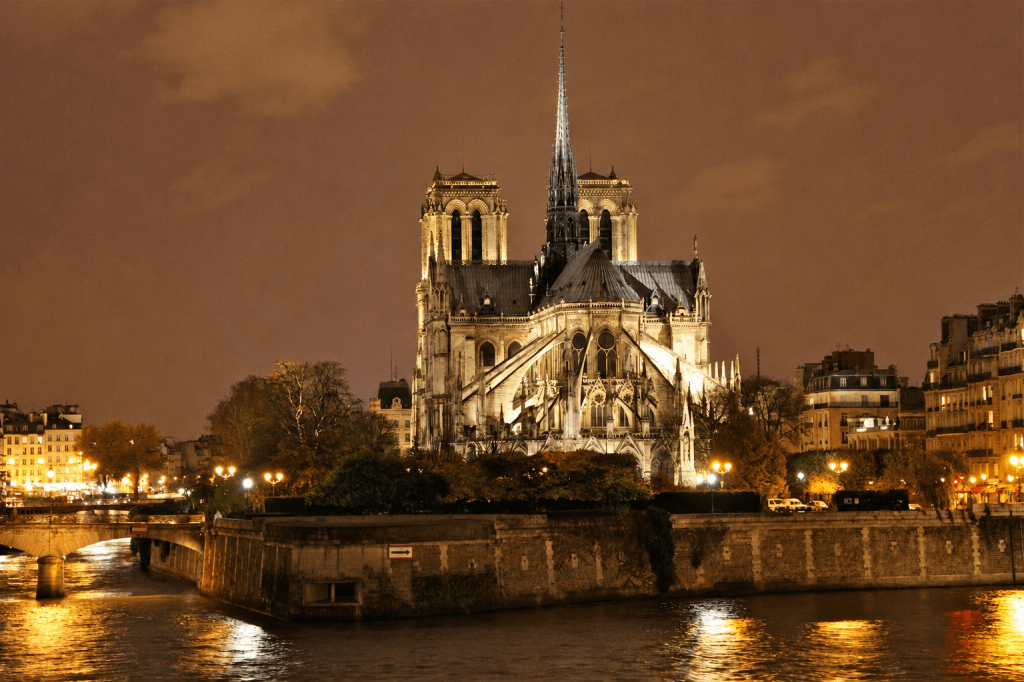
    For twenty minutes she has tried to hold together a guided tour in front of Notre-Dame. Half the group stopped listening ten minutes ago. One teenager is staring at pigeons. Another is staring at TikTok. The guide delivers a final fact about flying buttresses, raises the umbrella one last time, and marches her flock toward a waiting bus.

    Within minutes, the square changes character.

    The souvenir stalls close their shutters. The tour groups evaporate. A cyclist carrying a Deliveroo bag cuts across the cobblestones without slowing. Two architecture students sit on a low wall debating whether the restoration looks too clean. The cathedral remains exactly where it was five minutes earlier, but somehow appears larger.

    This is usually the moment Paris starts getting interesting.

    Travel writers often describe Paris at night as if the city becomes a giant cocktail menu. Every article eventually arrives at the same destination: rooftop bars, cabarets, champagne, jazz lounges, expensive terraces with views of monuments that have already appeared in a thousand Instagram posts.

    That version of Paris exists. It is also crowded with people trying to experience Paris, but a more interesting city emerges after they leave.

    The best summer nights in Paris rarely revolve around nightlife. They revolve around attention. They belong to people willing to trade reservations for wandering, rooftops for riverbanks, and itineraries for curiosity. They belong to insomniacs, photographers, students, bakers, hospital workers, late-shift waiters, and the occasional tourist who accidentally misses the last sensible route home and discovers something better in the process.

    This is a guide to that Paris.

    9:45 P.M. — Notre-Dame Stops Performing

    Address: 6 Parvis Notre-Dame – Place Jean-Paul II, 75004

    Metro: Cité, Saint-Michel, Hôtel de Ville

    During the day, Notre-Dame often feels less like a cathedral than a traffic pattern.

    Thousands of visitors circulate through the square. Guides raise umbrellas. Cameras click. People queue, shuffle, photograph, and move on. The building becomes scenery for human activity.

    Night reverses the equation.

    The crowd thins. The noise drops. The western façade rises out of shadow like a limestone cliff. Details hidden by daylight suddenly emerge. The portals acquire depth. The towers become heavier. The entire structure feels older.

    Not prettier, older. That distinction matters.

    Many visitors arrive searching for atmosphere. Paris usually provides something more interesting than atmosphere. It provides evidence. Eight centuries of stone remain standing in the middle of one of the busiest cities on earth. The fact itself carries more weight than any ghost story.

    A couple sits beneath the cathedral sharing a pistachio gelato. A priest crosses the square carrying a backpack. A municipal worker drags a hose across the pavement. Nobody appears particularly impressed by the building behind them.

    Parisians rarely are, and that may be the most Parisian thing of all.

    10:15 P.M. — Cross The River

    Most visitors walk across Pont Saint-Louis because they are going somewhere. The better approach involves walking across because there is nowhere to go.

    Île Saint-Louis remains one of the strangest pieces of real estate in Europe. It occupies the center of a capital city visited by tens of millions of people, yet somehow retains the energy of a place slightly detached from the surrounding machinery.

    The island grows quieter as the evening progresses.

    Residents walk dogs. Elderly couples return from dinner. Apartment windows glow above the quays. The smell of river water mixes with cigarette smoke and the lingering sweetness of ice cream from Berthillon.

    Nothing much happens here. That’s the attraction.

    Modern tourism trains people to seek stimulation every few minutes. Paris after dark rewards the opposite instinct. The city becomes more interesting when it stops trying to entertain.

    The narrow streets around Quai d’Anjou and Quai de Bourbon feel almost stubbornly resistant to novelty. The façades remain old. The proportions remain human. The river remains close enough to hear.

    Visitors searching for excitement often miss these places. Visitors searching for Paris usually don’t.

    10:45 P.M. — Place Dauphine Gets Away With Murder

    Not literally.

    At least probably not.

    Address: Place Dauphine, 75001

    Metro: Pont Neuf

    Place Dauphine feels like a clerical error in the urban planning records.

    The square sits on some of the most valuable land in France, yet behaves like a forgotten village green. Millions of tourists pass within a few hundred feet each year. Many never find it.

    By late evening, chestnut trees cast long shadows across the gravel. Someone reads a newspaper beneath a lamp. Two men play chess. A woman drinks white wine from a paper cup while pretending to work on a novel.

    Perhaps she actually is. The square does something increasingly rare. It allows people to exist without demanding performance.

    No monument requires photographing. No attraction requires ticketing. No queue requires joining. The place simply sits there in the middle of Paris refusing to monetize every second of attention.

    Stay twenty minutes. Most visitors never do.

    11:30 P.M. — The Catacombs Follow You

    Tourists come to Paris looking for beauty. The Catacombs offer something else: cramped tunnels, skull-lined walls, and a reminder that every old city has a hidden basement.

    Address: 1 Avenue du Colonel Henri Rol-Tanguy, 75014

    Metro: Denfert-Rochereau

    The Catacombs closed hours ago. That hardly matters. Six million dead Parisians remain exactly where they were.

    Earlier in the day, visitors descended into former limestone quarries and walked through galleries lined with human remains. Most emerge treating the experience like an attraction completed and checked off a list.

    The Catacombs are not an attraction, they are context. The knowledge changes the city above them.

    Standing outside Denfert-Rochereau at night, watching buses pass cafés and pharmacies, it becomes difficult not to think about what lies beneath the pavement. Paris begins feeling layered rather than flat. Every church acquires additional weight. Every apartment building gains another dimension.

    Tourists frequently search for ghost stories. The reality is more unsettling.

    An entirely ordinary city sits atop one of the largest ossuaries on earth. Nobody talks about it very much because everybody already knows.

    You have to walk down 130 steps to see the spectacle of human remains, so try to take advantage of a priority time slot ticket so you don’t have to wait in a one-to-three-hour line beforehand. Save your patience for the descent.

    Midnight — Dinner Is The Nightlife

    American visitors often misunderstand Paris. They assume nightlife begins after dinner. Paris frequently disagrees.

    La Grande Crèmerie

    8 Rue Grégoire de Tours, 75006

    Chez Georges

    11 Rue des Canettes, 75006

    Around midnight, occupied tables remain occupied.

    A waiter carries another basket of bread. Someone orders one final glass and immediately begins considering a second final glass. Conversations drift from politics to literature to gossip and back again. The table next door has clearly been sitting there for hours and shows no signs of leaving.

    Nobody seems concerned. This is not slow service, it is a fundamentally different understanding of time.

    Many of the best nights in Paris involve a plate of Comté, a carafe of wine, a notebook, and absolutely no plan. The city excels at lingering. It treats lingering as a legitimate activity rather than a failure to optimize one’s evening.

    That may sound minor. It is not.

    1:15 A.M. — The Seine Belongs To The Stubborn

    Seine river bridge in Paris at night.
    By 1 a.m., the river belongs to the people who stayed: students sharing supermarket wine, cyclists heading home, insomniacs, photographers, and anyone not quite ready to call it a night.

    The river changes again after midnight.

    Most tourists have disappeared. The influencers have gone home. The evening crowd has thinned into something more interesting.

    Four students occupy a stretch of quay beneath Pont Louis-Philippe. They are sharing a bag of Monoprix salted chips, two bruised nectarines, and a bottle of rosé that lost its chill an hour ago. A cyclist rolls past carrying a towel from an evening swim. Someone nearby is discussing philosophy with the confidence usually reserved for people who have never studied it.

    The reopening of the Seine Swimming changed this atmosphere.

    Not dramatically, subtly. The river feels used now.

    People argue about water quality. They compare swimming sites. They debate whether they would ever get in. The Seine no longer functions exclusively as scenery. It has become part of daily life again.

    The change remains visible even after the swimmers leave.

    2:15 A.M. — Châtelet Never Sleeps Properly

    Metro: Châtelet–Les Halles

    Most neighborhoods become quieter at night. Châtelet becomes stranger.

    The station acts as a circulatory system for the entire region. Even after midnight, people continue arriving from somewhere and leaving for somewhere else. Night-shift workers pass tourists. Teenagers pass business travelers. A man carrying flowers passes a woman carrying a cello case.

    Nobody seems connected. Everyone is.

    This may be the closest Paris comes to revealing its machinery. The monuments disappear, but the transportation network remains.

    3:20 A.M. — The Bakers Are Awake

    At 3:20 a.m., the city starts preparing tomorrow.

    A white Renault delivery van rattles up Rue des Martyrs. Lights glow behind bakery windows. Workers carry trays. Espresso machines hiss. Municipal cleaning crews wash yesterday’s cigarette butts and melted ice cream from the pavement.

    The city no longer belongs to visitors, it belongs to workers. This is the shift change nobody photographs.

    The people preparing breakfast have already started their day before most tourists have gone to bed.

    Paris survives because of them, not because of monuments.

    4:25 A.M. — Montmartre Before Montmartre

    Montmartre street at dusk
    For about thirty minutes before dawn, Montmartre stops being a tourist attraction and becomes a neighborhood again.

    Montmartre at noon feels like a tourist attraction. Montmartre at 4:25 a.m. feels like a neighborhood. The distinction is enormous.

    The portrait artists are asleep. The souvenir stalls remain shuttered. Place du Tertre sits empty. Delivery vans outnumber visitors.

    For a brief period, the hill becomes visible beneath the commerce built around it. The steep streets feel steeper, the silence feels earned. This may be the most honest version of Montmartre available.

    It doesn’t last long. By sunrise, the city begins selling the neighborhood again.

    4:55 A.M. — Midnight Movies in the Park

    If you stay awake long enough during the high summer weeks, you can catch the tail end of the city’s open-air cinema events. The Outdoor Cinema at La Villette rounds out the night for film lovers who prefer watching classic cinema under the stars, wrapping up just before dawn begins to break across the canal network. It serves as a reminder that the city’s artistic core doesn’t retreat indoors when the galleries lock up.

    5:03 A.M. — Paris Changes Shifts

    We began with one shift change, we end with another.

    Bakery displays fill with croissants. Market deliveries arrive. Early commuters emerge from apartment buildings. The first tourists begin waking up and planning a day that will look remarkably different from the night that preceded it.

    The Seine remains where it was, Notre-Dame remains where it was, the Catacombs remain where they were.

    Only the people have changed. Travel guides often describe Paris as magic, but that suggests illusion.

    Paris after dark is compelling precisely because it strips illusion away. The crowds thin. The sales pitch ends. The performance concludes. What remains is a large, complicated, beautiful, frustrating city occupied by people trying to live their lives.

    The monuments still matter, the river still matters, the history surely still matters.

    Yet somewhere between Notre-Dame at 9:37 p.m. and Montmartre at 4:25 a.m., another version of Paris emerges. Quieter. Stranger. Less interested in impressing anybody.

    For people willing to stay awake long enough to meet it, that version is usually the one worth remembering.

  • After Olympics failure, Officials Plan to Make Seine Swimmable in 2025 – What to Expect

    After Olympics failure, Officials Plan to Make Seine Swimmable in 2025 – What to Expect

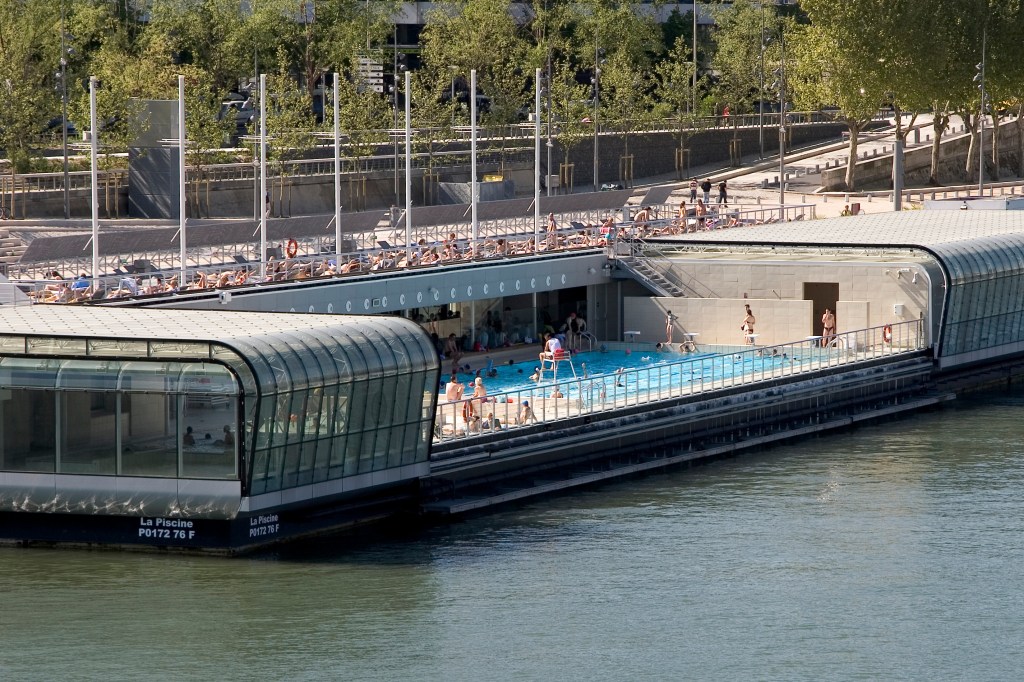
    Piscine Joséphine Baker in the 13th arrondissement

    The Seine River winds its way through the heart of Paris for 777 kilometers. Renowned for its beauty, the Seine immediately evokes romance and amour for those who gaze upon it and its overlying bridges adorned with masterfully wrought sculptures. Its tranquil waters, which transition from vibrant turquoise to silken black under the veil of night, serve as both a scenic backdrop and a transport artery for the city. The river has inspired many great art works, serving as a muse for painters like Claude Monet and Edouard Manet, as well as a setting in famous film scenes. Today, the ancient waterway stands at the cusp of a new era, as Paris aims to transform it from a look-but-don’t touch scenic adornment to a swimmable urban oasis.

    The Paris 2024 Summer Olympics put the Seine under a global spotlight. The bold plan to prepare the river for Olympic swimming competitions faced great difficulties, ultimately failing to meet its deadline. Now, after the conclusion of Olympic festivities, focus has shifted towards making the Seine fit for swimming by summer 2025, making this vacation season the first in a century when journeyers to the city will swim the Seine. 

    A Plunge Through Time: History of Swimming in the Seine

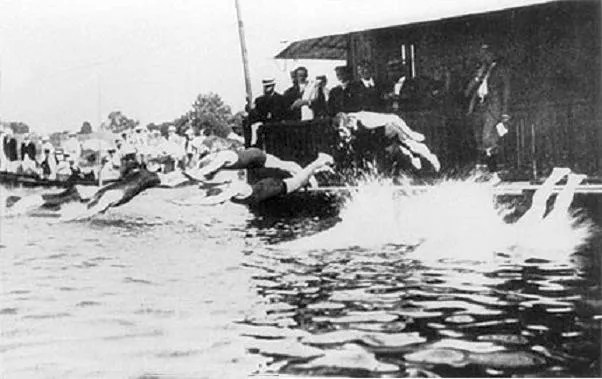
    Athletes swim the Seine River for the 1900 Paris Summer Olympics
    Athletes swim the Seine for the 1900 Summer Olympics. Public domain

    In the 17th century, Parisians frequently swam in the river, often nude in typical French Lasaie-faire fashion. 

    In the year of 1923, swimming in the Seine was forbidden in all city areas because of worries about health and safety.

    The 2025 reopening will mark a return to this centuries-old tradition after a 102-year hiatus. 

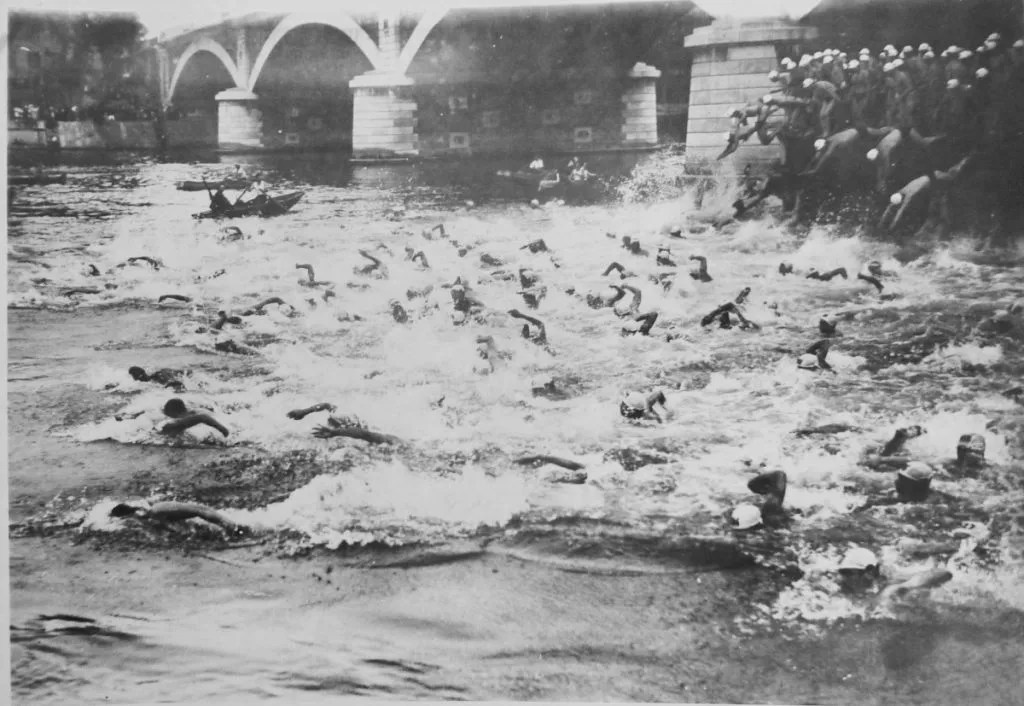
    Swimmers in Seine River for the Traversée de la Nage swimming competition in Paris
    Swimmers in the Traversée de la Nage swimming competition in Paris/date unknown. Public domain

    The Olympic Catalyst

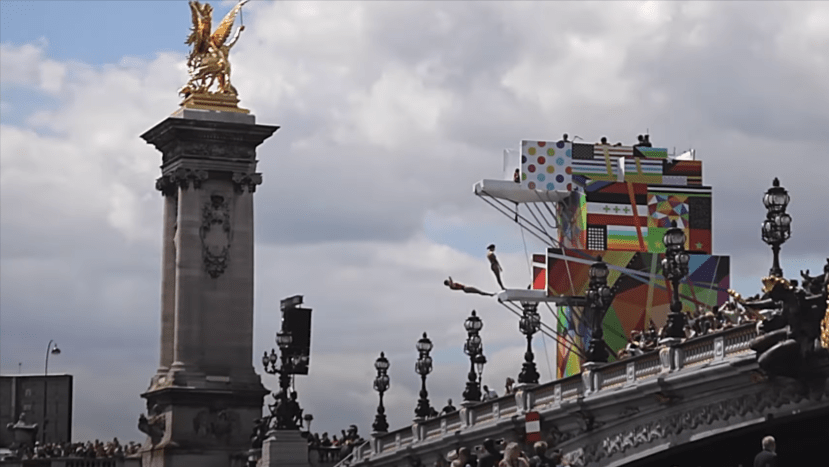
    Olympic swimmers diving into the Seine River at 2024 Paris Summer Olympics Games practice
    Swimmers diving into the Seine River before 2024 Paris Summer Olympics Games

    The 2024 Paris Olympic Games played a crucial role in the Seine’s transformation:

    The city undertook a  €1.4 billion cleanup effort. 

    110 triathletes and 55 marathon swimmers participated in five open-water events.

    On July 17, 2024, the Mayor of Paris, Anne Hidalgo, made a special attempt to show that the water was safe by taking a swim in it herself.


    The Race to 2025


    Paris officials continue to assert that the possibility of swimming in the Seine by 2025 is achievable. The headway achieved during Olympic cleanup activities laid robust groundwork.  However, challenges remain. 

    Ongoing Cleanup Efforts

    Stormwater Basins: The huge stormwater basin near the Austerlitz train station on the Left Bank, with a capacity of 20 Olympic swimming pools, is doing its job. However, authorities are still questioning whether it can withstand unpredictable weather conditions.

    Wastewater Links: There has been major progress in linking suburban residences and companies straight to the sewage system of Paris. But, regulatory adherence from restaurant boats is still spotty, with approximately 50% sticking to wastewater emission guidelines.

    Water Quality Monitoring: Progress can generally be seen in water quality, though with heavy rainfall, bacteria levels increase. This ongoing problem complicates attempts to make the Seine consistently safe for swimmers.

    Infrastructure Improvements: Changes made to old wastewater treatment facilities and the introduction of disinfection machines, have cut down on pollution. Still, officials acknowledge that additional improvements may be necessary to achieve targets set for 2025.

    Water quality monitoring: Daily laboratory tests for E. coli and Enterococci bacteria levels. Also real-time monitoring using ColiMinder or Fluidion tools. 

    Increased vegetation planting: Yet another way planners are trying to make the river and surrounding areas cleaner and healthier. 

    Challenges Ahead

    Climate Effect: More often, we expect to face severe rain events. This will challenge the strength of wastewater systems.

    Public Doubt: Many remain worried about health effects from water, especially after recent cases of stomach flu among athletes.

    Despite these lingering doubts, local government bodies appear faithful that continuous efforts will fix these problems by the start of swimming season. 

    If plans are successful, summer 2025 will make vacationing in Paris extra special for travellers who are there for the opening of the Seine. Here are the latest projections about what they can expect during their visit. 

    Paris plans to reveal its progressive new vision for urban swimming. The plan includes three carefully arranged public locations for swimming in the Seine River,  chosen for easy access, safety, and proximity to the city’s lively cultural life – providing a fresh experience for residents as well as visitors. Now let’s take an in-depth view at what is anticipated. 

    Special Events and Cultural Programming

    Paris intends to utilize these swimming zones for organizing a range of events, in line with the city’s momentum after the Olympics. Possible major attractions include:

    Open-water competitions similar to Olympic events, drawing international athletes and spectators.

    Community swim days encouraging residents and tourists to explore the new spaces.

    Cultural festivals with music, dance, and art installations around the river banks. 

    Guests also have the chance to partake in riverside dining at many floating restaurants and bateaux-mouches cruises, providing views of city from water.

    Also, swimming season will coincide with European Heritage Days (Journées européennes du patrimoine). This event offers guided tours and shares knowledge about both ecological and cultural importance of this river.

    Starting June/July 2025, three sites in central Paris will open for experienced swimmers.

    Designated Swimming Sites

    Bras Marie

    Near to Île Saint-Louis, this central Paris swimming location offers views of Notre-Dame Cathedral and famous bridges over Seine River. Nearby Marais has mix of old buildings, fashionable shops, and top-class restaurants, making it an ideal choice for a day out in the city. 

    Location: Between the Sully and Marie bridges near the Marais on the right bank.

    Scene:

    • Picturesque stretch with views of Île Saint-Louis.
    • Historic stone quays and Haussmann-style buildings.
    • Pontoons for easy water access and sunbathing.
    • Historic architecture blended with modern amenities.

    Neighborhood: The historic Marais district

    Nearby Attractions:

    • Place des Vosges
    • Musée Carnavalet
    • Maison de Victor Hugo

    Dining:

    • Chez Janou
    • L’As du Fallafel

    Shopping and Services:

    • Rue des Francs-Bourgeois
    • BHV Marais
    • Marché des Enfants Rouges

    Transportation:

    • Metro: Saint-Paul (Line 1) or Pont Marie (Line 7)
    • Bus: Lines 67, 69, 96

    Bras de Grenelle

    Cose to the Eiffel Tower in the stylish and eclectic 15th arrondissement, bathers will get an impressive view of the Bir-Hakeim bridge, which many will recognize from its many movie appearances. In addition, Champ de Mars and Trocadéro gardens are not far away.

    Location: Near the Eiffel Tower on the left bank.

    Scene:

    • Views of the Eiffel Tower and Statue of Liberty replica.
    • Modern floating platforms for swimming access.
    • Grassy areas along the banks for kicking back.

    Neighborhood: 15th arrondissement

    Nearby Attractions:

    • Eiffel Tower
    • Champ de Mars
    • Statue of Liberty replica

    Dining:

    • Le Bistrot du 15e
    • L’Epopée

    Shopping and Services:

    • Beaugrenelle shopping center
    • Rue du Commerce
    • Marché Grenelle

    Transportation:

    • Metro: Bir-Hakeim (Line 6) or Charles Michels (Line 10)
    • RER: Champ de Mars-Tour Eiffel (RER C)

    Bercy

    Situated in once gritty 12th arrondissement, this place combines modern culture with green environments. Bercy Village, a revamped wine warehouse district, is within walking distance and brims with boutiques and coffee shops. Also nearby, Parc de Bercy offers memorable scenery and great strolling grounds and picnic-able spots. 

    All places swimming pots will offer full amenities, like dressing rooms, showers, lockers, storage spaces, as well as stations for lifeguards, buoys, and pontoons. Operations is expected to run from June till September. Exact dates of openings and closings are still contingent on water quality checks and weather situations.

    Location: Around the Passerelle Simone de Beauvoir.

    Scene:

    • Modern urban setting with contemporary architecture.
    • Floating pontoons and decks for swimming access,
    • Sleek, minimalist design for changing facilities.
    • Art installations along the riverbanks.

    Neighborhood: 12th arrondissement

    Nearby Attractions:

    • Parc de Bercy
    • Cinémathèque Française
    • AccorHotels Arena

    Dining:

    • Faust
    • Le Train Bleu

    Shopping and Services:

    • Bercy Village
    • Cour Saint-Emilion
    • Marché d’Aligre

    Transportation:

    • Metro: Cour Saint-Emilion (Line 14) or Bercy (Lines 6 and 14)
    • Bus: Lines 24, 64, 87

    Beyond the Seine: Additional Swimming Sites in Greater Paris

    Aside from the above three swim locations, city officials in Paris have selected 20 other potential swimming location around the Paris borders. This demonstrates a broader endeavor to use urban water routes again for public activities. The Marne River is among these spots, as well other tributaries for serving locals and preventing overcrowding at Seine sites.

    For instance, Canal Saint-Martin and some sections of Canal de l’Ourcq, set in fashionable areas, may be among the choices for potential swimming spots in the future. These canals today draw crowds for boating and picnicking. There’s a possibility they could turn into lively centers for bathing and swimming soon.

    Ready for Primetime: Outdoor pools

    While waiting for the Seine or on days when it’s closed, visitors can cool off at one of the city’s many outdoor/indoor swimming pools that are open to the public. 

    Josephine Baker Swimming Pool

    This modern pool that floats on the Seine, with aesthetics inspired by its namesake, contains four lanes, each 25m long. Also, it has a sundeck of 500 square meters. 

    People swimming in Piscine Josephine Baker pool in Paris, France, in summer with sunset
    Piscine Josephine Baker in the 13th arrondissement

    Location: 13th arrondissement, on the left bank of the Seine

    Scene:

    Impressive glass and steel building with a stylish aquatic center.

    Nearby attractions: 

    • Bibliothèque Nationale (National Library), 
    • Bercy neighborhood 
    • Batofar (a boat venue)

    Bassin de la Villette

    Temporary swimming pools that annually pop up as part of Paris Plages, will be back in 2025 after taking a break in 2024. They include the Bassin De Le Villette in the outer part of the capital. 

    Location: 19th arrondissement, in northeastern Paris.

    Scene: Open-air swimming site set up in the city’s largest artificial body of water.

    Nearby attractions:

    • Canal Saint-Martin
    • Parc de la Villette
    • Cité des Sciences et de l’Industrie

    Both locations offer unique Parisian experiences. Piscine Josephine Baker provides a modern, urban swimming environment with views of the Seine. The Bassin de la Villette provides a more calm, beach-type environment during the Paris Plages festival.

    Tips for visitors:

    • Check water quality reports before swimming.
    • Bring essentials: towel, sunscreen, water bottle.
    • Be prepared for potential closures due to water quality issues.
    • Consider visiting during Paris Plages for a fuller Parisian summer experience.
    • Respect local regulations and lifeguard instructions.

    Will Paris Deliver?

    The reality of swimming in the Seine is nearer now than it has been for many decades, but the green light hasn’t signalled just yet. It will

  • Parisians Retook the Seine in 2025 — Holidayers Swam, Brits Snapped, Banks Hummed With Spilled Rosé and Damp Pages. What’s Next?

    Parisians Retook the Seine in 2025 — Holidayers Swam, Brits Snapped, Banks Hummed With Spilled Rosé and Damp Pages. What’s Next?

    Paris, 2025. The Seine, that murky artery slicing through the city, had been off-limits for swimming since 1923. A century of pollution, bureaucracy, and bad decisions had kept it that way. But then, the city decided to clean up its act—€1.4 billion worth of act—and opened three designated swimming sites along the river. Bercy, Bras Marie, and Grenelle. They called it a “legacy” of the 2024 Olympics. A lot of us called it a gamble.

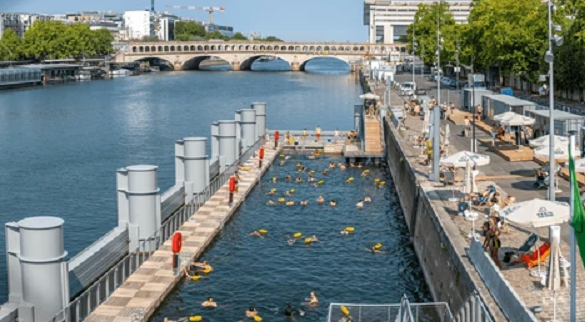
    Opening day, July 5. The sun was out, the air thick with anticipation and sunscreen. The Bercy site, near the François Mitterrand Library, was the largest. Two pools, a solarium-type beach, and a capacity of 700 swimmers. It looked like a cross between a public pool and a luxury resort. The water temperature was 22°C (71°F)—warmer than the sea, according to some swimmers. The lifeguards wore high-visibility vests, the kind you see at construction sites, not beaches. Safety first, they said.

    The first swimmers hesitated at the edge, then plunged in. They wore bright yellow lifebuoys, part of the strict safety measures enforced by lifeguards. The current was weak, just enough to tug gently at their limbs—a reminder that this was still a living, urban river. The atmosphere was buzzing. People cheered from the banks, snapping photos, laughing, and celebrating the moment. For a brief moment, the grime and grind of daily life melted away, replaced by the simple joy of swimming in the heart of Paris.

    Monitored swimming site on the Seine
    Monitored swimming site on the Seine

    Verdict from the vox populi

    Victoria Cnop, a 24-year-old Brazilian resident of Paris, expressed her surprise and delight:
    “Really nice, I’m impressed, surprised. I never imagined being in the water close to the Eiffel Tower.” Reuters

    Karine, a 51-year-old Parisian, shared her thoughts on the water quality:
    “The water is clean, it’s warm, it’s clear. There is a bit of algae, but that’s normal. Come here everybody, it’s great!” Reuters

    A local café owner near the Bercy swimming site noted the increased business:
    “We had to double our staff. The demand was unreal. It’s like the whole city decided to take a swim and then dry off with a croissant.” Reuters

    A tourist from London, enjoying the view from the Grenelle site, commented:
    “Swimming in the Seine with the Eiffel Tower in the background? It’s surreal. I never thought I’d see the day.” The Associated Press

    A swimmer at the Bras Marie site, after taking a dip, said:
    “The water was surprisingly warm. It’s not something I expected from a river in the middle of a city.” Reuters

    The River as Retail

    When Paris reopened the Seine in 2025, the ripple effect on local businesses was immediate. Cafés, brasseries, and boutiques along the riverbanks saw foot traffic spike. Floating bookshops—crammed with Hemingway, Balzac, and overpriced postcards—became hotspots for tourists snapping selfies while clutching novels. One shopkeeper told reporters sales “soared like the river itself.”

    Riverside cafés doubled staff to keep up. Patrons sipped espressos and cold rosé while swimmers cut through the water below, turning the banks into an open-air theater. Tour guides reported larger-than-usual crowds, with visitors drawn as much to the spectacle of people swimming as to the history lining the river.

    The tourism boost was undeniable. Hotels, boat tours, and nearby attractions saw upticks in reservations, while the riverbanks themselves became a magnet for activity that hadn’t been there in decades. The Seine wasn’t just a body of water anymore—it was a summer economy, cash registers ringing in tandem with the paddles and waves on the water.

    The other side of the Seine

    The Seine’s reopening wasn’t all postcards and Instagram uploads. Crowds swarmed the riverbanks, turning quiet walks into bottlenecks. Cafés and the iconic bouquinistes—those green-booked barges—struggled to keep merchandise dry while navigating the flood of tourists and swimmers. Foot traffic spiked, yes, but for some, it was chaos disguised as opportunity.

    Water quality was a looming question mark. Heavy rains in August 2025 forced temporary closures at Bercy, Bras Marie, and Grenelle, just a day after reopening. Around 3,000 swimmers had taken the plunge before the shutdown, proving the demand but also the fragility of this experiment. Kids splashed near cafés and bookstalls, vendors scrambled, and the delicate balance between leisure and disorder was on full display.

    For those seeking a quiet and peaceful summer afternoon on the Seine? Well, they had fewer days and hours to choose from the first year of swimming after a century-long wait. It was progress, yes—but messy, loud, and unpredictable.

    Looking ahead


    If 2025 was a trial by water, 2026 is shaping up to be the sequel—bigger, busier, and slightly more managed. Paris plans to expand the number of designated swimming sites along the Seine, with new locations under consideration and the Bras Marie site being relocated to ease river traffic and improve accessibility. Around thirty towns in the Greater Paris region, especially in Hauts-de-Seine, have applied to host supervised bathing areas, reflecting the growing appetite for urban river swimming.

    Hauts Seine could be next

    Water quality has improved markedly. As far back as 2023, safety tests showed the river swimmable roughly seven days out of ten. But perfection is still out of reach. Persistent pollutants, particularly PFAS—those “forever chemicals”—remain a concern; the Seine has the second-highest PFAS contamination among European rivers.

    To tackle this, the city is investing in serious infrastructure. A massive underground storage tank near Austerlitz is designed to prevent untreated sewage from hitting the river during heavy rains. It holds the equivalent of 20 Olympic swimming pools, with water treated before release.

    So next summer, expect more swimmers, more crowds, more commerce. The river will be alive, bustling, and unpredictable. The Seine of 2026 promises all the spectacle, risk, and raw urban energy that made 2025 unforgettable. Swim carefully, and keep your eyes on the water; the river has a way of reminding you it’s still the Seine.